
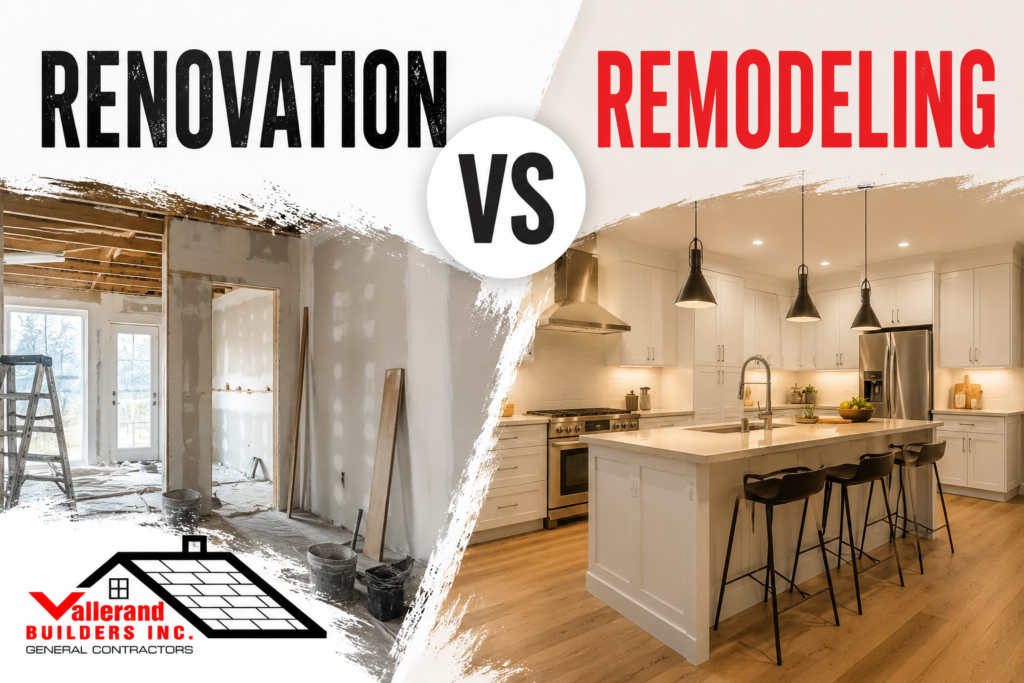
When planning a home upgrade, many people use the terms renovation and remodeling interchangeably, but they represent two very different approaches to improving a space. While both aim to enhance your home, the way they do it and the impact they have can vary significantly.
Understanding this difference is essential because it directly affects your budget, timeline, permits, and overall expectations. Renovation typically involves updating what already exists, while remodeling focuses on changing the structure or layout. Choosing the right approach ensures you invest your time and money wisely and achieve the outcome you actually need.
Making the right decision early helps avoid unnecessary costs, delays, and rework, while ensuring your project runs smoothly from start to finish.
What Is Renovation?
Renovation focuses on restoring, updating, or improving an existing space without changing its structure or layout. The goal is to enhance what is already there rather than redesign it. The walls, floor plan, and overall flow of the space remain the same, but the appearance and functionality are improved.
In a renovation project, the changes are typically surface-level but still impactful. This can include replacing old flooring, repainting walls, upgrading fixtures, installing new cabinets, or repairing worn-out elements. Even though the structure stays intact, these updates can significantly improve how a space looks and feels.
One of the key advantages of renovation is efficiency. Since there are no major structural changes, the process is usually faster and more predictable. Costs are generally lower because the work involves fewer materials and less labor. In many cases, permits are minimal or not required, making the process smoother and less complex.
Renovation is ideal when your current layout already works for your needs but the space feels outdated or worn. It allows you to refresh your home, improve functionality, and increase value without major disruption.
What Is Remodeling?
Remodeling involves changing the structure, layout, or purpose of a space. Instead of working within the existing design, remodeling redefines it. This type of project focuses on transforming how a space looks and functions.
In a remodeling project, you might remove or add walls, expand rooms, redesign the floor plan, or convert spaces entirely. For example, turning a closed kitchen into an open-concept layout, adding a new bathroom, or converting a garage into a living area are all remodeling projects.
Because remodeling involves structural changes, it requires more planning and coordination. Professionals such as designers, architects, and contractors are often involved to ensure the project is safe and meets building codes. Permits are typically required, and inspections may be needed throughout the process.
Remodeling projects are usually more expensive and time-consuming due to the complexity of the work. However, they offer a much higher level of transformation, allowing you to create a space that better fits your lifestyle and long-term needs.
Key Differences Between Renovation and Remodeling
| Aspect | Renovation | Remodeling |
| Definition | Improves or restores an existing space | Changes the structure, layout, or purpose of a space |
| Scope of Work | Surface-level updates and repairs | Structural changes and redesign |
| Layout Changes | No changes to layout | Layout is often modified or completely redesigned |
| Complexity | Simpler and more straightforward | More complex and requires detailed planning |
| Cost | Generally lower | Usually higher due to structural work |
| Timeline | Shorter and more predictable | Longer with multiple phases |
| Permits | Minimal or not always required | Often required due to structural changes |
| Professionals Involved | Contractors or specialists for updates | Architects, designers, and contractors |
| Risk Level | Lower risk of unexpected issues | Higher risk, especially in older homes |
| End Result | Refreshed and updated space | Transformed space with new functionality |
When Should You Choose Renovation?
Renovation is the right choice when your space is structurally sound but looks outdated, worn, or no longer visually appealing. If your current layout already works well and supports your daily needs, there is no reason to make major structural changes. Instead, renovation allows you to refresh the space while keeping the existing design intact.
This approach is ideal for homeowners who want to improve the overall appearance, update finishes, or make small functional upgrades without disrupting the structure of the home. It works well for projects like modernizing kitchens or bathrooms, replacing flooring, updating lighting, or repainting interiors.
Renovation is also a practical option when you are working with a limited budget or need the project completed quickly. Since there are fewer complexities involved, timelines are shorter and costs are easier to manage. It allows you to achieve noticeable improvements without the need for extensive planning or approvals.
When Should You Choose Remodeling?
Remodeling becomes the better option when your current space no longer meets your needs. If the layout feels restrictive, inefficient, or outdated in terms of functionality, simply updating surfaces will not solve the problem. Remodeling allows you to redesign the space completely to better suit your lifestyle.
This is the right approach when you want to change how a space flows or functions. For example, opening up walls to create an open layout, adding new rooms, or converting unused areas into functional living spaces all fall under remodeling. It gives you the flexibility to reimagine your home rather than work within its existing limitations.
Remodeling is especially useful for growing families, changing lifestyle needs, or homeowners looking to significantly increase property value through structural improvements. While it requires more time, planning, and investment, it delivers a more substantial transformation and long-term benefits.
Cost and Timeline Considerations
Renovation projects are generally more cost-effective because they do not involve major structural changes. The scope of work is more straightforward, which makes both costs and timelines more predictable. Materials and labor are easier to estimate, and there are fewer unexpected challenges during execution.
Remodeling projects, however, tend to be more expensive due to the complexity involved. Structural modifications, design work, permits, and extended timelines all contribute to higher costs. These projects often require coordination between multiple professionals, which adds to both time and budget.
There is also a greater chance of unforeseen issues during remodeling, especially in older homes where hidden structural or system-related problems may surface once work begins. Because of this, careful planning and working with experienced professionals is essential to keep the project on track and avoid delays or budget overruns.
Understanding these differences helps you set realistic expectations and choose the approach that aligns best with your goals, budget, and timeline.
Which Option Is Right for You?
The right choice depends on your goals, budget, and how you currently use your space. If your layout already works well and you are mainly looking for a visual and functional upgrade, renovation is the more practical and cost-effective path. It allows you to refresh your home without the complexity of major structural changes.
If your space no longer fits your lifestyle or feels inefficient, remodeling becomes the better investment. It gives you the flexibility to redesign the layout, improve flow, and create a space that truly meets your needs. While it requires more time and planning, it delivers a more complete transformation.
In many cases, homeowners choose a combination of both. You might remodel one area, such as a kitchen or living space, while renovating other parts of the home to maintain consistency and manage costs. This balanced approach often provides the best results in terms of impact and budget.
Final Thoughts
Renovation and remodeling serve different purposes, and understanding the difference helps you make better decisions for your home improvement project. Renovation focuses on improving and refreshing what already exists, while remodeling is about transforming and redefining your space.
Before starting any project, it is important to clearly define your goals, budget, and expectations. This clarity will guide your decision, help you choose the right approach, and ensure a smoother process from start to finish. When planned correctly, both renovation and remodeling can add value, improve functionality, and enhance the overall comfort of your home.