
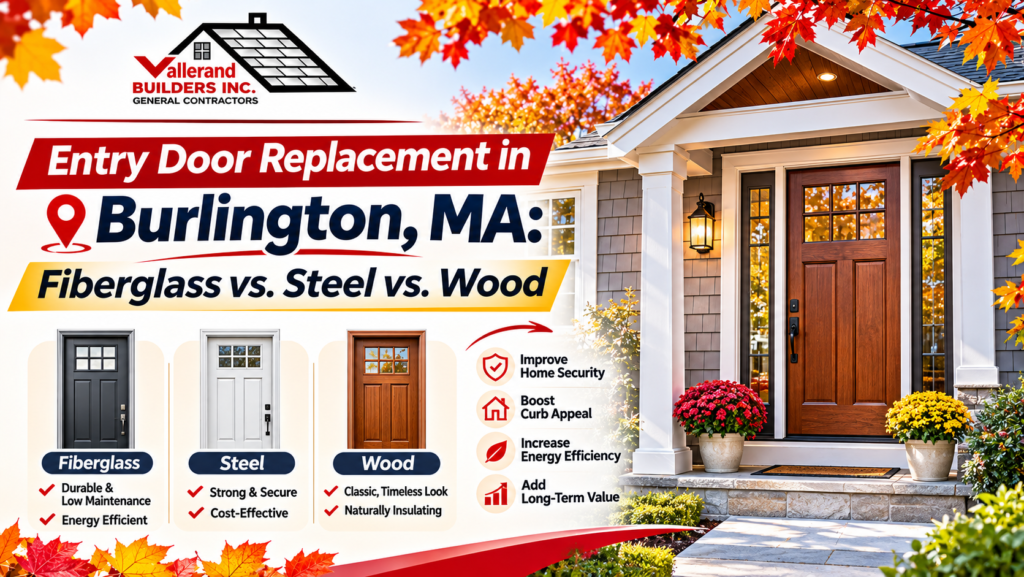
Your front door is the first thing guests see and the last line of defense against a January nor’easter. If yours sticks in summer, lets in cold air in winter, or simply looks tired, entry door replacement in Burlington, MA can improve comfort, security and curb appeal in a single day.
The biggest decision is the material. Fiberglass, steel and wood each have real strengths, and each behaves differently through Massachusetts winters. This guide compares all three, explains which features matter most in our climate, and walks you through cost factors and the installation process.
Vallerand Builders is a licensed and insured contractor based in nearby Billerica. For more than 30 years we have installed doors and windows for homeowners in Burlington, Billerica, Andover, Waltham and surrounding towns. Learn more about our door and window replacement services.
Signs your Bedford home needs replacement windows
Many Burlington homes were built in the 1950s through the 1970s, and plenty still have original or second-generation entry doors. Watch for these signs:
- Drafts or daylight around the edges when the door is closed
- Frost, condensation or ice on the inside of the door in winter
- A door that sticks, sags or will not latch without a push
- Soft, rotted wood at the bottom of the door, frame or threshold
- Rust, dents or peeling paint on a steel door
- Locks that are hard to turn or feel insecure
- A dated look that drags down curb appeal
If rot has reached the frame or threshold, it is usually best to replace the complete door system, not just the slab.
Fiberglass entry doors
Benefits of fiberglass doors
- Excellent insulation thanks to a foam core, which helps on cold Burlington mornings
- Will not rot, warp, rust or dent in normal use
- Realistic wood-grain textures that can be stained to look like oak, mahogany or cherry
- Low maintenance compared with wood
- Stable through freeze-thaw cycles, so it is less likely to stick or bow
Drawbacks of fiberglass doors
- Dents from impacts are difficult to repair
- Scratches that reach bare metal can rust, especially in salty winter conditions
- The surface can get very cold in winter and very hot in direct sun
- Fewer convincing wood-look options
Steel entry doors
Benefits of steel doors
- Strong and secure, especially with a reinforced frame and quality locks
- Good insulation from the foam core
- Often the most affordable option
- Clean, modern look that takes paint well
Drawbacks of steel doors
- Dents from impacts are difficult to repair
- Scratches that reach bare metal can rust, especially in salty winter conditions
- The surface can get very cold in winter and very hot in direct sun
Wood entry doors
Benefits of wood doors
- Unmatched natural beauty and a solid, heavy feel
- Ideal for historic and traditional homes where authenticity matters
- Fully customizable in size, species, glass and carving
- Scratches and dings can be sanded and refinished
Drawbacks of wood doors
- Expands and contracts with humidity, which can cause sticking in summer and gaps in winter
- Needs regular sealing, staining or painting to stand up to Massachusetts weather
- Most expensive of the three for quality, custom products
- Not ideal for doors facing harsh weather with no porch or overhang
Which entry door is best for Burlington homes?
For most Burlington homeowners, fiberglass is the best all-around choice. It insulates well, resists rot and dents, handles winter without warping, and can look like real wood. Steel is a smart pick for budget-conscious projects, side doors and garage entry doors where security is the priority. Wood is best for a covered front entry on a traditional colonial where you want authentic character and are willing to maintain it.
Features that matter in Massachusetts winters
Casement windows crank open from the side and press tightly against the frame when closed, creating one of the tightest seals of any operating window. Awning windows hinge at the top and can stay open during light rain. Both work well over kitchen sinks and in basements.
Energy efficiency and weatherstripping
Look for an ENERGY STAR certified door rated for the Northern climate zone. Equally important are compression weatherstripping, an adjustable threshold and a tight bottom sweep. Even the best door will leak air if it is not installed square and sealed properly.
Glass options and sidelites
Decorative glass, sidelites and transoms add light to dark front halls. Choose insulated, Low-E glass to reduce heat loss and condensation. Privacy glass works well for doors facing the street.
Locks, hardware and security
Choose a solid deadbolt, a reinforced strike plate with long screws into the framing, and multi-point locking for taller doors. Smart locks and video doorbells are popular upgrades that pair well with a new door.
Door styles that suit Burlington homes
- Six-panel and four-panel doors for colonials and capes
- Craftsman doors with a row of glass near the top for bungalows and updated ranches
- Modern flush or plank doors in bold colors for contemporary and mid-century homes
- Doors with sidelites to brighten narrow entry halls in split-levels
- Dutch doors for mudroom and side entrances
If you are also updating windows, matching the door finish to new window trim gives the exterior a cohesive look. Read our guide to choosing replacement windows for ideas.
What affects entry door replacement cost in Burlington, MA
- Material and grade – steel, fiberglass or wood, and builder-grade vs. premium lines
- Slab only vs. pre-hung system – a complete pre-hung door with a new frame and threshold costs more but seals better
- Sidelites and transoms
- Glass inserts and decorative glass
- Hardware and locks, including smart locks
- Rot repair to the subfloor, sill or framing
- Custom sizes for older or historic openings
- Interior and exterior trim, paint or stain
Many homeowners replace the front door at the same time as other exterior updates, such as exterior painting or a larger renovation, to refresh the whole entry at once.
Measuring and ordering: getting the fit right
A beautiful door that does not fit its opening will leak, stick and frustrate you for years. Most fit problems are avoidable with careful measuring and a clear plan before anything is ordered.
Slab, pre-hung unit or replacement in the existing frame
There are three common approaches. A slab is only the door itself, and it is used when the existing frame is square, sound and the right size. A pre-hung unit comes with a new frame, threshold and weatherstripping already assembled, so it is typically the more reliable way to get a tight seal. In some cases a door can be installed in the existing frame with a new threshold and weatherstripping. Which approach makes sense depends on what we find when we inspect the frame, the sill and the surrounding trim, which is why an in-home look matters before a quote is final.
Door swing, handing and clearances
The direction a door swings affects traffic in the entry hall, the furniture near the door and how it interacts with a storm door. Stand outside and decide which side the hinges should be on and whether the door should open into the house or out. Check that the open door will clear a railing, a stair landing or a nearby light switch. In small Burlington entry halls, the difference of a few inches can decide whether a sidelite or a larger door is practical.
Lead times and ordering mistakes
Custom sizes, special glass and certain finishes can take longer to arrive than standard stock doors. The most common ordering mistakes are wrong handing, the wrong rough opening size, and glass or hardware that does not match what the homeowner expected. Ask for the door specification in writing, including the size, swing, glass type, hardware finish, and whether it is primed, painted or stained, and review it carefully before approving the order.
What happens behind the trim: frames, sills and flashing
The visible door is only part of the system. Most long-term problems, including drafts and rot, begin in the parts you cannot see once the trim is on.
Why the threshold and sill matter
The sill is the sloped surface under the threshold, and it is the place where water most often finds its way in. A sill that is soft, cracked or sloped the wrong way can let moisture into the framing and subfloor, and a new door installed over it will not solve the problem. When we remove an old door, we inspect the sill and the framing underneath so any damage can be repaired before the new unit is set. If the original problem was a failed or missing overhang, it is worth considering how to shield the door from the weather as well.
Flashing and water management
Flashing, which is waterproof material installed around and under the opening, directs water away from the framing. Done properly, it works with the siding or trim above and the sill pan below so that water has no path into the wall. Older homes often have little or no flashing at the entry, so a replacement is a good chance to improve it. Ask your contractor how the opening will be flashed and what materials will be used.
Insulating and air sealing the rough opening
The gap between the door frame and the framing is usually filled with insulation. Low-expansion foam made for windows and doors, or other approved insulation, helps stop air movement without bowing the frame. Using too much expanding foam can push the frame out of square and cause the door to bind, so this step needs a careful hand. A well-sealed opening is one of the biggest reasons a new door feels noticeably warmer in January.
Protecting your new door through the seasons
A new door will perform best, and last longest, with a little attention over the years.
Finishing and sealing
A fiberglass or wood door that arrives unfinished needs paint or stain on all surfaces, including the top and bottom edges, to keep moisture out. Follow the door manufacturer’s finishing instructions, because some warranties depend on them. Darker colors on doors that face strong afternoon sun can absorb more heat, and some manufacturers limit dark finishes on certain products, so check before choosing a bold color.
Simple seasonal checks
Twice a year, usually in early fall and spring, open and close the door and look for light around the edges, worn weatherstripping and a threshold that no longer meets the bottom sweep. A quick adjustment to the threshold or the hinges is often all it takes. Lubricate hinges and locks as the manufacturer recommends, and clear snow and ice from the base of the door instead of chipping at it.
Storm doors, overhangs and shelter
A covered porch or overhang is one of the best things you can do for any entry door, especially wood. If your front door faces the weather directly, a storm door can add a layer of protection, but ventilation matters: some storm doors can trap heat against the main door in strong sun, so ask about options designed to prevent that. If you are thinking about adding a small portico or porch roof, we can discuss it as part of a larger renovation.
Security upgrades that pair well with a new door
A strong door is only as secure as the frame, the strike plate and the lock.
The frame and strike plate
Many break-ins defeat the frame rather than the door itself. A reinforced strike plate with long screws that reach the framing behind the jamb adds meaningful strength, and so does a properly installed, solid frame. These improvements are inexpensive relative to the rest of the project, and they are best done at the time the door is installed.
Locks, smart hardware and cameras
A quality deadbolt is the baseline. If you want a keypad or smart lock, choose one from a reputable manufacturer and consider what happens during a power or network outage, since many include a physical key as a backup. A video doorbell can be added at any time, but wiring and mounting are easiest to plan while the trim is off. Think through who will receive notifications and how the system will be maintained.
Side and garage entries
Side doors and garage entries are often overlooked, even though they are used every day and are easy to forget when planning. A steel door can be a sensible, budget-conscious choice here, as noted earlier, and the same attention to the frame and lock applies.
Planning the project around Massachusetts weather
Entry doors are among the few exterior projects that can be done in nearly any season, but timing and preparation still matter.
Winter replacement: what to expect
On a cold day, the opening will be exposed for a few hours. A well-prepared crew has the new unit staged, removes the old door, makes repairs and sets the new one quickly. Plan to keep pets and children away from the area, and move rugs and furniture out of the entry beforehand. Caulks, sealants and paint have temperature limits, so some finishing steps, such as painting the exterior trim, may be scheduled for milder weather.
Permits and the Building Department
Requirements vary from town to town, and they can depend on whether the size of the opening or the framing is changing. We recommend confirming with the Building Department in Burlington, or in your own town, before work begins. A licensed contractor should know what is typically required and can handle the paperwork on your behalf.
Questions to ask before you sign
A short list of questions will help you compare door contractors and avoid surprises.
- Will the estimate cover the full door system, or only the slab, and what is included in trim, paint and disposal?
- How will the sill and framing be inspected, and what happens if rot is found?
- Who handles the permit, if one is needed?
- What warranties apply to the door itself and to the installation work?
- What is the expected arrival time for the door, and what is the plan if it is delayed?
A clear, written answer to each of these is a good sign. If you would like to talk through your options, our door and window replacement services team can walk through your entry in person.
Our entry door installation process
- Free in-home consultation. We measure the opening, check the frame and threshold for rot, and help you compare styles and finishes.
- Written estimate. You receive a clear proposal listing the door, glass, hardware and trim.
- Ordering. Custom and pre-hung doors typically take a few weeks to arrive.
- Removal and prep. We remove the old door and frame, repair any rot, and prepare a level, weatherproof sill.
- Installation. The new door is set plumb and square, flashed, insulated and sealed.
- Finishing. We install trim, hardware and weatherstripping, adjust the door for a smooth, tight close, and clean up.
Most entry doors are installed in a single day, so your home is never left unsecured overnight.
Schedule entry door replacement in Burlington, MA
A new entry door makes your home warmer, safer and more welcoming. Vallerand Builders installs fiberglass, steel and wood doors for homeowners in Burlington, Billerica, Andover, Waltham, Malden and nearby towns. Request a free door consultation or call 978-670-5533. See what neighbors say on our testimonials page.
Entry door replacement FAQs for Burlington homeowners
What is the best front door material for Massachusetts winters?
Fiberglass is usually the best choice for Massachusetts winters. It insulates well, does not rot or rust, and stays stable through freeze-thaw cycles. Steel is a strong, affordable alternative.
Are fiberglass doors better than steel doors?
Fiberglass resists dents and rust better and can look like real wood, while steel is often more affordable and very secure. Both insulate well with a foam core.
How long does entry door replacement take?
Most entry doors are replaced in a single day. Doors with sidelites, transoms or significant rot repair may take longer.
Can a front door be replaced in winter?
Yes. An experienced crew removes the old door and installs and seals the new one in a few hours, so very little heat escapes. Winter appointments are often easier to schedule.
Do I need a permit to replace an entry door in Burlington, MA?
Many Massachusetts towns require a building permit for exterior door replacement, especially if the opening size or framing changes. A licensed contractor should check with the Burlington Building Department and handle any permit needed.
How long does a new entry door last?
A quality fiberglass or steel entry door can last for decades with basic care. Wood doors last a long time too, but need regular refinishing to protect them from the weather.
Should I replace just the door slab or the whole door system?
If the frame, sill and threshold are sound, square and the right size, replacing only the slab can work. If there is rot, movement or persistent drafts, a complete pre-hung system is usually the more reliable choice. An in-home inspection is the best way to decide.
How can I tell if my entry door frame has rot?
Press gently on the bottom of the frame, the threshold and the trim with a screwdriver tip or your thumb. Soft, crumbly or spongy wood, peeling paint that keeps returning and stains on the floor inside the door are common warning signs. If you see any of them, have a professional take a closer look before ordering a door.
Will a new entry door lower my heating costs?
It can help, particularly if your current door leaks air around the edges. Savings depend on the condition of the old door, the new door’s construction and how well it is installed and sealed, so it is best to think of comfort as the main benefit and energy savings as a possible bonus.
Schedule entry door replacement in Burlington, MA
A new entry door makes your home warmer, safer and more welcoming. Vallerand Builders installs fiberglass, steel and wood doors for homeowners in Burlington, Billerica, Andover, Waltham, Malden and nearby towns. Request a free door consultation or call 978-670-5533. See what neighbors say on our testimonials page.