
Building a custom home is one of the most personal and important investments a homeowner can make. Unlike buying an existing property, custom home construction gives you the opportunity to design a home around your lifestyle, family needs, design preferences, property, and long-term plans. However, the success of your project depends heavily on the custom home builder you choose.
The right custom home builder can help you plan clearly, avoid costly mistakes, manage permits, coordinate subcontractors, control the construction schedule, and deliver a home that matches your expectations. The wrong builder can lead to budget problems, delays, poor communication, quality concerns, and unnecessary stress throughout the process.
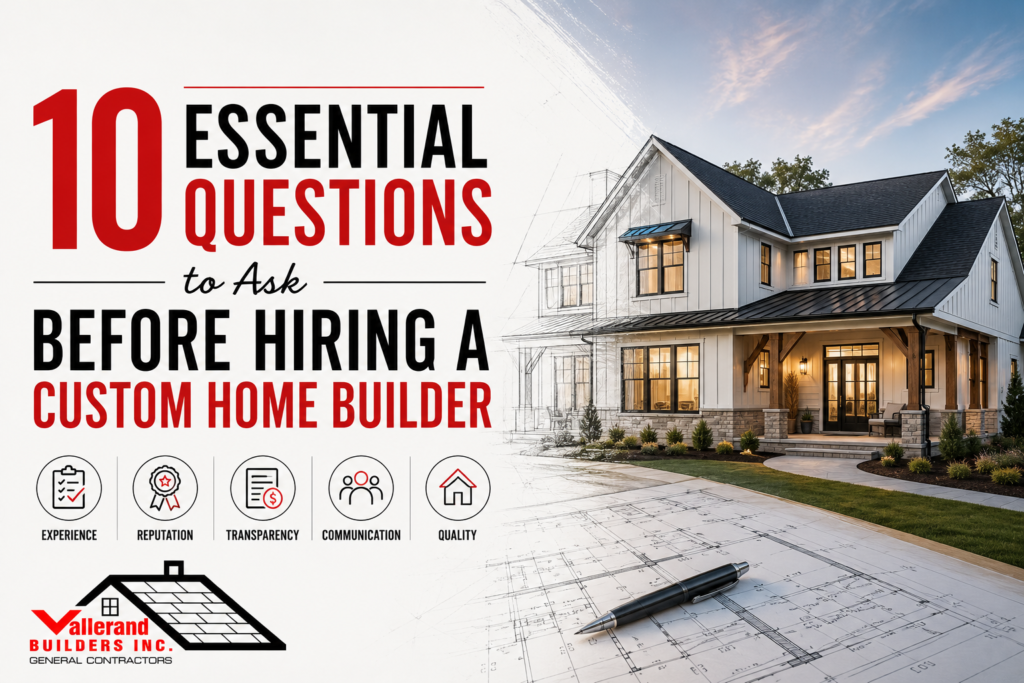
Before hiring a custom home builder, homeowners should ask the right questions. These questions help you understand the builder’s experience, process, communication style, budgeting approach, project management skills, and ability to handle challenges. Whether you are building a custom home in Billerica, MA, another part of Massachusetts, or a nearby community, these questions can help you make a more confident and informed decision.
Why Asking the Right Questions Matters Before Building a Custom Home
A custom home project involves many moving parts. There are design decisions, site conditions, permits, inspections, materials, subcontractors, budgets, weather delays, and construction details that must be managed carefully. A builder may look impressive online, but homeowners need to understand how the company actually works before signing a contract.
Asking detailed questions protects you from misunderstandings. It helps you compare builders more fairly and identify whether a company is the right fit for your project. Some builders may be strong at luxury custom homes, while others may focus on smaller new construction projects, additions, or renovations. Some may offer full design-build services, while others may require you to bring completed architectural plans. Some may be very transparent with pricing, while others may provide vague estimates that lead to confusion later.
A custom home builder should be able to answer your questions clearly and confidently. If a builder avoids direct answers, rushes the conversation, or cannot explain their process, that may be a warning sign.
1. How Much Experience Do You Have With Custom Home Construction?
Why This Question Is Important
Experience matters in custom home construction because every project is different. A custom home is not the same as a standard remodel or a production-built house. It requires detailed planning, strong coordination, site knowledge, design understanding, and the ability to solve problems as they arise.
When asking about experience, do not only ask how long the builder has been in business. Ask specifically about custom home construction. A company may have many years of general construction experience but limited experience building fully custom homes from the ground up.
You want to know whether the builder has handled projects similar to yours in size, style, complexity, budget, and location. For example, if you are building a custom home in Massachusetts, it helps to work with a builder who understands New England weather, local permitting processes, building codes, energy efficiency requirements, and common site conditions.
What to Listen For
A strong custom home builder should be able to discuss completed projects, explain their construction background, and describe the types of homes they typically build. They should also be comfortable talking about challenges they have handled, such as difficult lots, complex designs, tight timelines, or custom finishes.
You can ask follow-up questions such as:
- How many custom homes have you built?
- Have you built homes similar to the style and size we want?
- Do you have experience building in this town or region?
- Can you show examples of completed custom homes?
- What types of custom home projects are the best fit for your company?
The goal is to understand whether the builder has the right experience for your specific project, not just general construction knowledge.
2. Are You Licensed, Insured, and Familiar With Local Building Requirements?
Why This Question Is Important
A custom home builder should have the proper licensing and insurance required for the work they perform. This protects both the homeowner and the builder. Licensing shows that the builder meets required standards, while insurance helps protect against accidents, property damage, or liability issues during construction.
Local knowledge is also important. Building a custom home involves permits, inspections, zoning requirements, utility coordination, site work, and code compliance. A builder who understands local requirements can help the process move more smoothly.
If you are building a custom home in Billerica, MA or another Massachusetts town, the builder should be comfortable working with local building departments, reviewing zoning considerations, and coordinating inspections. They should understand that each property may have different requirements depending on lot size, setbacks, wetlands, utilities, and site conditions.
What to Ask
Before hiring a custom home builder, ask:
- Are you properly licensed for custom home construction?
- Do you carry general liability insurance?
- Do you carry workers’ compensation insurance?
- Can you provide proof of insurance?
- Are you familiar with local permitting and inspection requirements?
- Have you worked with building departments in this area before?
A reliable builder should not hesitate to provide this information. If a builder avoids the topic or cannot provide documentation, homeowners should be cautious.
3. What Is Included in Your Custom Home Building Process?
Why This Question Is Important
Every custom home builder has a different process. Some builders provide design-build services, meaning they help with both design and construction. Others only handle construction after the homeowner has already hired an architect and completed the plans. Some builders offer early budgeting and planning support, while others become involved later.
Understanding the builder’s process helps you know what to expect from the beginning. It also helps prevent gaps in responsibility. For example, you need to know who will coordinate the architect, engineers, permits, selections, subcontractors, inspections, and final walkthrough.
A clear process is one of the signs of a professional custom home builder. It shows that the builder has a system for managing complex projects instead of making decisions as problems appear.
What a Strong Process Should Include
A detailed custom home building process may include an initial consultation, site evaluation, budget discussion, design coordination, plan review, permit preparation, construction scheduling, material selections, site preparation, foundation work, framing, mechanical systems, inspections, interior finishes, exterior work, final walkthrough, and warranty support.
Ask the builder to explain the process step by step. You should understand what happens before construction starts, what happens during construction, and what happens after the home is completed.
Helpful Follow-Up Questions
You can ask:
- Do you offer design-build services?
- Do you work with architects and designers?
- At what stage should we bring you into the project?
- How do you help with early budgeting?
- Who handles permit coordination?
- How are selections and finishes managed?
- What happens during the final walkthrough?
The more clearly the builder explains the process, the easier it will be for you to understand how your project will be managed.
4. How Do You Handle Budgeting and Cost Estimates?
Why This Question Is Important
Budgeting is one of the most important parts of custom home construction. Many homeowners worry about costs increasing during the project, and that concern is valid. Custom homes involve many decisions, and the final cost can be affected by design complexity, site conditions, materials, finishes, labor, permits, utilities, and change orders.
A trustworthy custom home builder should explain how they prepare estimates, what is included, what is excluded, and where allowances are used. They should also explain how they handle changes and unexpected costs.
A vague estimate can create problems later. If the estimate does not clearly define the scope of work, homeowners may think something is included when it is not. This can lead to frustration and added expenses during construction.
What to Ask About the Estimate
Before hiring a builder, ask:
- How do you prepare your cost estimate?
- What is included in the estimate?
- What is not included?
- Are site work, permits, utilities, landscaping, and driveway costs included?
- Do you use allowances for fixtures, finishes, cabinets, flooring, or appliances?
- How do you handle changes after construction begins?
- How often will we receive budget updates?
A detailed estimate should help you understand the full financial picture. It should not be limited to the basic structure of the home if other major costs will still be your responsibility.
Why Allowances Matter
Allowances are estimated amounts set aside for certain items, such as tile, lighting, appliances, cabinetry, countertops, or plumbing fixtures. Allowances are common in custom home construction, but they must be realistic.
For example, if the allowance for kitchen appliances is too low, you may end up spending more than expected when it is time to make selections. This does not always mean the builder is doing something wrong, but it does mean you need to understand whether the allowances match your expectations.
A good builder will help you make selections that align with your budget and explain where upgrades may increase the final cost.
5. How Do You Handle Permits, Zoning, and Inspections?
Why This Question Is Important
Permits and inspections are a major part of custom home construction. Before work begins, the project must meet applicable zoning, building code, and local approval requirements. During construction, inspections are needed at different stages to confirm that the work meets required standards.
A custom home builder should understand how permitting works and who is responsible for each step. If the builder expects the homeowner to handle certain approvals, that should be explained clearly. If the builder manages permits directly, you should understand what is included in that service.
For homeowners building in towns like Billerica, MA, local permitting knowledge can be valuable. Lot conditions, setbacks, building height, utilities, demolition, driveway access, wetlands, and zoning requirements may all affect the project.
What to Ask
Ask the builder:
- Will you help with building permits?
- Who prepares and submits permit applications?
- Do you review zoning requirements before construction?
- How do you coordinate inspections?
- What permits may be needed besides the building permit?
- What happens if the town requests changes or additional information?
- How can permitting affect the project timeline?
A builder with local experience should be able to explain the process in a way that is easy to understand. They should not make unrealistic promises about approval timelines, because permitting can vary depending on the town, property, and project details.
6. What Is the Expected Timeline for the Project?
Why This Question Is Important
Custom home construction takes time. The timeline includes more than the physical construction phase. Homeowners should also account for planning, design, budgeting, engineering, permitting, site preparation, construction, inspections, and final completion.
A builder should be able to give you a realistic timeline based on the size and complexity of your project. They should also explain what can affect the schedule, including weather, permitting delays, material availability, change orders, site conditions, and inspection timing.
Be cautious if a builder promises an unusually fast timeline without reviewing the plans, property, and scope of work. A realistic timeline is more valuable than an overly optimistic one.
What to Ask About Scheduling
Ask questions such as:
- What is the estimated timeline from planning to completion?
- How long does construction typically take once permits are approved?
- What factors could delay the project?
- How do you manage the construction schedule?
- How often do you update homeowners on progress?
- What happens if weather or material delays occur?
- How are subcontractors scheduled?
A professional builder should be able to explain the schedule clearly and identify the major milestones. These may include site preparation, foundation, framing, roofing, rough mechanicals, insulation, drywall, finishes, exterior work, final inspections, and walkthrough.
Why Homeowner Decisions Affect the Timeline
Homeowners also play a role in keeping the project on schedule. Delayed selections, late design changes, and indecision can slow down construction. Your builder should explain when decisions need to be made and how selections will be organized.
For example, cabinets, windows, flooring, tile, and fixtures may need to be selected early because ordering and delivery can take time. A builder with a strong process will help you stay ahead of these decisions.
7. Who Will Manage My Project Day to Day?
Why This Question Is Important
The person you meet during the sales or consultation process may not be the person managing your project every day. Before hiring a custom home builder, you need to understand who will be responsible for communication, site supervision, scheduling, subcontractor coordination, and quality control.
A custom home project requires consistent management. Without clear leadership, details can be missed, schedules can slip, and homeowners may not know who to contact when questions arise.
What to Ask
Ask the builder:
- Who will be my main point of contact?
- Will there be a dedicated project manager?
- Who supervises the job site?
- How often will someone from your team be on site?
- How do you communicate updates?
- How quickly do you respond to homeowner questions?
- How are subcontractors managed?
You should feel comfortable with the communication structure before signing a contract. A clear chain of communication helps prevent confusion throughout the project.
Why Communication Style Matters
Some homeowners want frequent updates and detailed explanations. Others prefer fewer updates as long as the project is moving smoothly. There is no single right communication style, but expectations should be clear.
A good builder will explain how updates are shared. This may include emails, phone calls, meetings, project management software, progress photos, or scheduled site visits. The important thing is that homeowners know how they will stay informed.
8. Can You Provide References or Examples of Completed Custom Homes?
Why This Question Is Important
Past work is one of the best ways to evaluate a custom home builder. Photos, project examples, testimonials, and references can help you understand the builder’s style, quality, and experience.
A builder’s portfolio can show whether they have experience with homes similar to what you want. References can help you learn what it is like to work with the builder during the actual construction process.
What to Look for in Past Projects
When reviewing completed custom homes, look beyond appearance. A beautiful photo is helpful, but homeowners should also ask about craftsmanship, layout quality, material choices, and long-term performance.
If possible, ask whether the builder has completed homes similar in size, budget, style, or location. A builder who mainly works on small projects may not be the right fit for a large custom home. A builder who mainly works on luxury homes may not be the right fit for a more budget-conscious project.
Questions to Ask References
When speaking with past clients, ask:
- Was the builder easy to communicate with?
- Did the project stay close to the expected budget?
- Were there major delays?
- How did the builder handle problems?
- Was the job site organized?
- Were you satisfied with the quality of work?
- Would you hire the builder again?
References can give you practical insight that is difficult to get from a website or sales conversation.
9. How Do You Handle Changes, Problems, and Unexpected Costs?
Why This Question Is Important
Even with strong planning, custom home projects can involve changes or unexpected issues. Site conditions, material availability, design adjustments, weather, permitting requirements, or homeowner preferences can affect the project.
The question is not whether challenges will ever happen. The question is how the builder handles them.
A professional custom home builder should have a clear process for change orders, problem-solving, approvals, and cost communication. Homeowners should never be surprised by major changes without explanation.
What to Ask About Change Orders
Ask the builder:
- How do you handle change orders?
- Will we receive written pricing before approving changes?
- How do changes affect the schedule?
- Who must approve changes?
- How are unexpected costs communicated?
- How do you handle hidden site issues?
- How do you document decisions?
A clear change order process protects both the homeowner and the builder. It ensures that everyone understands the cost, scope, and timeline impact before work changes.
Why Problem-Solving Matters
Custom home construction requires problem-solving. A builder may need to adjust plans due to site conditions, coordinate with engineers, find alternative materials, or resolve conflicts between design and construction details.
A strong builder communicates problems early, offers solutions, and helps homeowners make informed decisions. A weak builder may delay communication, blame others, or move forward without proper approval.
10. What Warranty or Post-Construction Support Do You Provide?
Why This Question Is Important
The relationship with your custom home builder should not end the moment construction is complete. New homes may need minor adjustments after move-in. Materials settle, systems are tested through different seasons, and small issues may appear after the home is occupied.
A builder’s warranty and post-construction support show how they stand behind their work. Before hiring a builder, homeowners should understand what is covered, how long coverage lasts, and how service requests are handled.
What to Ask
Ask the builder:
- Do you provide a written warranty?
- What does the warranty cover?
- What is not covered?
- How long does the warranty last?
- How do homeowners submit warranty requests?
- Who handles post-construction service?
- Do you schedule a follow-up after move-in?
A clear warranty gives homeowners peace of mind. It also shows that the builder is committed to quality beyond the final payment.
Additional Questions Worth Asking a Custom Home Builder
The 10 questions above are essential, but homeowners may also want to ask additional questions depending on the project. These can help clarify expectations before making a final decision.
Questions About Design and Planning
Ask whether the builder works with architects, interior designers, engineers, surveyors, and landscape professionals. You may also want to ask how early the builder should be involved in the design process.
Early builder involvement can help align the design with the budget. It can also help identify construction challenges before plans are finalized.
Questions About Materials and Subcontractors
Ask how the builder chooses materials and subcontractors. A custom home depends on the quality of many trades, including framers, electricians, plumbers, HVAC contractors, roofers, painters, tile installers, and finish carpenters.
A builder should have trusted subcontractors and quality standards for each stage of construction.
Questions About Energy Efficiency
Energy efficiency is important for long-term comfort and performance. Ask how the builder approaches insulation, air sealing, windows, HVAC systems, ventilation, and energy-efficient materials.
A well-built custom home should feel comfortable throughout the year and perform well through changing seasons.
Questions About Site Cleanliness and Safety
Ask how the builder manages job site cleanliness, safety, material storage, and neighborhood impact. This is especially important if you are building in an established neighborhood.
A well-managed site reflects professionalism and respect for the property and surrounding area.
Red Flags to Watch for When Hiring a Custom Home Builder
Choosing a builder is not only about finding the right answers. It is also about noticing warning signs. Homeowners should be cautious if a builder is difficult to reach, avoids detailed pricing, refuses to provide references, does not explain the process, pressures you to sign quickly, or gives promises that seem unrealistic.
Other red flags may include unclear contracts, vague allowances, poor reviews, lack of insurance documentation, no written change order process, limited project examples, or unwillingness to discuss permits and inspections.
A custom home is too important to leave to uncertainty. If something feels unclear during the hiring process, it may become a bigger problem during construction.
How to Compare Custom Home Builders Fairly
When comparing custom home builders, do not focus only on the lowest estimate. The lowest price may not include the same scope, quality, allowances, site work, or level of service. A more detailed estimate may look higher at first but may provide a more realistic picture of the actual project cost.
Compare builders based on experience, communication, transparency, local knowledge, project management, craftsmanship, warranty, and trust. The best builder is not always the cheapest. The best builder is the one who can deliver the right home with clear expectations and professional management.
A custom home builder should make you feel informed, not pressured. They should help you understand decisions, not confuse you with vague answers.
Conclusion
Hiring a custom home builder is one of the most important steps in the home-building process. The builder you choose will influence your budget, timeline, construction quality, communication experience, and overall satisfaction with the finished home.
Before making a decision, ask detailed questions about experience, licensing, process, budgeting, permits, timeline, project management, past work, change orders, and warranty support. The answers will help you understand whether the builder is organized, trustworthy, experienced, and prepared to manage your project properly.
A custom home should be built with care, planning, and clear communication. By asking the right questions before hiring a custom home builder, homeowners can avoid unnecessary stress and choose a construction partner who is better prepared to bring their vision to life.
FAQs About Hiring a Custom Home Builder
When should I contact a custom home builder?
It is best to contact a custom home builder early in the planning process, even before final architectural plans are completed. Early builder input can help you understand budget, site conditions, construction feasibility, and design decisions before too much time or money is spent on plans.
Should I hire an architect or builder first?
It depends on the project and the builder’s process. Some homeowners hire an architect first, while others choose a design-build custom home builder who coordinates both design and construction. The most important thing is to make sure the design and budget are aligned early.
How do I know if a builder’s estimate is realistic?
A realistic estimate should include a clear scope of work, defined allowances, site work considerations, permit-related costs, material expectations, and explanation of exclusions. If an estimate is very low compared to others, ask what may be missing.
What should be included in a custom home builder contract?
A custom home builder contract should clearly explain the scope of work, pricing structure, payment schedule, allowances, change order process, timeline expectations, responsibilities, warranty details, and important terms. Homeowners should review the contract carefully before signing.
Is local experience important when hiring a custom home builder?
Yes, local experience is important because custom home construction involves permitting, inspections, zoning, weather conditions, site challenges, and regional building practices. A builder familiar with your area can help manage these details more effectively.
How many builders should I interview?
Homeowners often benefit from speaking with at least two or three builders before making a decision. This allows you to compare experience, communication, pricing approach, process, and overall fit.
What is the most important quality in a custom home builder?
Experience, communication, transparency, and quality are all important. A strong custom home builder should be able to manage the project professionally, explain decisions clearly, provide realistic expectations, and deliver quality work.