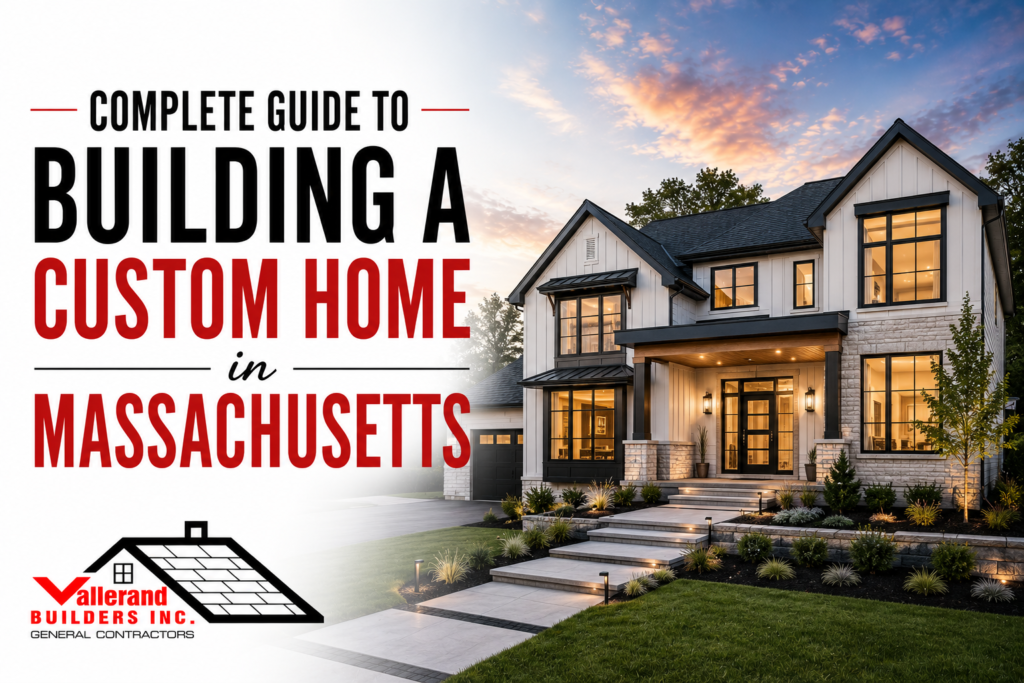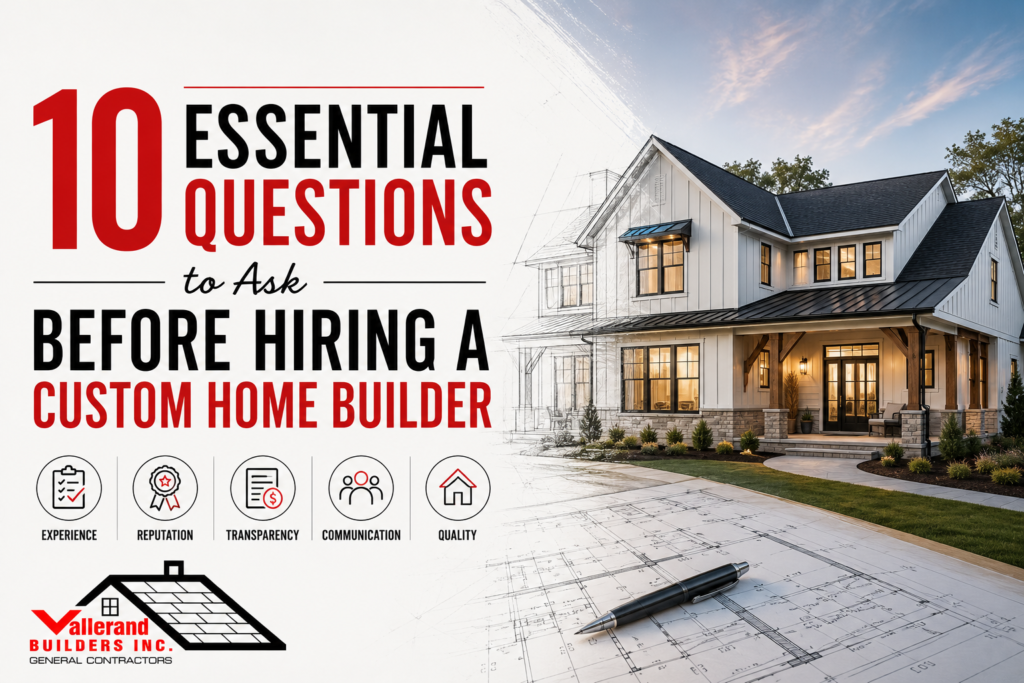
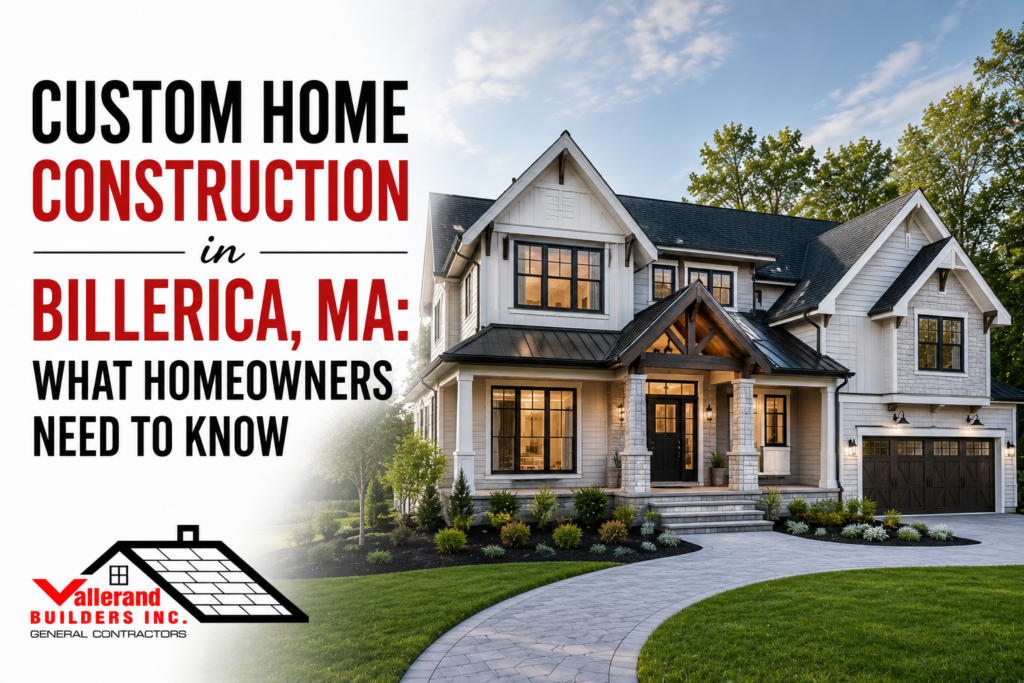
Building a custom home is a major decision, especially in a well-established Massachusetts town like Billerica. For many homeowners, custom home construction is not only about creating a beautiful house. It is about building a home that fits their family, lifestyle, future plans, property, and daily routines. Instead of adjusting to an older home with limited space, outdated systems, or a layout that does not match modern living, homeowners can create a residence designed specifically for the way they want to live.
Billerica, MA is an appealing location for custom home construction because it offers a practical balance of suburban comfort, local character, commuter access, established neighborhoods, and proximity to major employment and service areas in Greater Boston and Middlesex County. Homeowners who want more space, better function, modern design, energy efficiency, and long-term flexibility may find that building a custom home in Billerica is a smarter option than trying to make an existing home work.
However, custom home construction requires careful planning. The process involves much more than choosing a floor plan or selecting finishes. Homeowners need to understand the lot, zoning, permits, construction budget, design goals, site preparation, utilities, energy performance, builder qualifications, and long-term maintenance needs. A successful custom home project begins with clear priorities and a strong understanding of what matters before construction begins.
Why Billerica, MA Is a Strong Location for Custom Home Construction
Billerica is a desirable place to build a custom home because it gives homeowners access to both convenience and residential comfort. The town is located within reach of Boston and surrounding communities such as Burlington, Bedford, Chelmsford, Lowell, Wilmington, Tewksbury, and Lexington. This makes it practical for homeowners who want to stay connected to work, schools, shopping, healthcare, and regional amenities while still living in a town with a more suburban feel.
Custom home construction in Billerica, MA can be especially valuable for homeowners who want a home that supports modern living. Many existing homes in Massachusetts were built decades ago, when families had different expectations for space, storage, technology, home offices, energy efficiency, and open living areas. While older homes may have charm, they often require major updates to meet today’s needs.
A custom home gives homeowners the opportunity to design from the ground up. The kitchen, bedrooms, bathrooms, garage, basement, office space, outdoor areas, and storage can all be planned intentionally. This helps create a home that feels comfortable from the beginning instead of becoming a long list of future renovation projects.
A Convenient Location for Families and Professionals
One of the biggest advantages of building a custom home in Billerica is the town’s location. For many homeowners, convenience is just as important as square footage. Billerica offers access to major roadways, nearby job centers, local schools, parks, retail areas, and surrounding towns. This can make daily routines easier for families, professionals, and homeowners who travel throughout Middlesex County and Greater Boston.
A custom home in Billerica can be designed around this lifestyle. For example, a household with multiple commuters may want a larger garage, a practical mudroom, organized storage, and a layout that makes mornings easier. A professional who works from home may want a quiet office with natural light and strong separation from family living areas. A family with children may want a finished basement, outdoor play space, and durable materials that can handle everyday use.
When the location already supports daily convenience, the home itself can be designed to make that convenience even stronger.
A Community That Supports Long-Term Living
Many homeowners choose custom home construction because they are thinking long term. They are not simply looking for a house that works for the next few years. They want a home that can support changing family needs, future resale appeal, work-from-home routines, aging-in-place considerations, and lifestyle changes over time.
Billerica is well suited for this kind of long-term planning. It offers an established community setting with residential neighborhoods, town services, local recreation, and access to nearby employment centers. For homeowners who want to put down roots, building a custom home in Billerica can provide the opportunity to create a lasting residence in a practical Massachusetts location.
What Custom Home Construction Really Means
Custom home construction means building a home that is designed specifically for the homeowner, the property, and the intended lifestyle. Unlike buying a production home or renovating an existing property, custom construction gives homeowners more control over layout, size, design, materials, finishes, systems, and long-term functionality.
This does not mean every decision has to be complicated or expensive. A custom home can be simple, efficient, traditional, modern, luxury-focused, family-friendly, or designed for aging in place. The value of custom construction comes from making intentional decisions instead of accepting whatever already exists.
Custom Home vs. New Construction Home
A custom home is different from a standard new construction home. In many new construction developments, buyers choose from a limited set of models, layouts, finishes, and upgrade packages. That approach can be useful for some homeowners, but it does not always provide full design flexibility.
With a custom home, the design can be built around the homeowner’s specific needs. The lot, sunlight, driveway placement, views, room sizes, ceiling heights, storage needs, basement plans, exterior style, and interior flow can all influence the final design. This makes custom home construction a better fit for homeowners who want more control and fewer compromises.
Custom Home vs. Major Renovation
Some homeowners consider renovating an existing home instead of building a new custom home. Renovation may be the right choice when the structure is strong, the layout is workable, and the required updates are manageable. However, in some cases, older homes may have limitations that are expensive or difficult to fix.
A major renovation may involve structural changes, plumbing updates, electrical work, insulation improvements, HVAC upgrades, roofing, window replacement, foundation issues, and layout changes. These projects can become costly, especially if hidden problems appear during construction.
Building a custom home may be a better option when the existing home no longer supports the homeowner’s goals. New construction allows everything to be planned from the beginning, including energy efficiency, room flow, mechanical systems, storage, accessibility, and future expansion.
Planning a Custom Home in Billerica, MA
The planning stage is one of the most important parts of custom home construction. A well-planned project is easier to budget, easier to permit, easier to build, and easier to enjoy once completed. Homeowners should take time to define what they want before making major design or construction decisions.
Planning should include lifestyle needs, lot conditions, budget expectations, design preferences, local requirements, construction timeline, and builder selection. The more clearly these items are addressed at the beginning, the fewer problems homeowners are likely to face later.
Start With Your Lifestyle, Not Just the Floor Plan
Many homeowners begin by looking at floor plans, but the better starting point is lifestyle. A custom home should be designed around how the household actually lives. This includes morning routines, work schedules, family activities, entertaining, storage needs, hobbies, pets, guests, and future plans.
For example, a family with young children may need open visibility between the kitchen and family room, easy access to the backyard, a large mudroom, and bedrooms grouped together. A household with teenagers may need separate study areas, a finished basement, larger bathrooms, and better sound separation. A homeowner planning for retirement may want first-floor living, wider hallways, fewer steps, and low-maintenance materials.
A custom home should solve real daily problems. The design should make life easier, not just look impressive on paper.
Identify Must-Haves and Nice-to-Haves
Before the design process begins, homeowners should separate must-have features from nice-to-have features. This helps keep the project focused and protects the budget.
Must-have features may include the number of bedrooms, a first-floor bedroom, a home office, a two-car garage, a certain kitchen size, or accessibility features. Nice-to-have features may include a wine room, outdoor kitchen, larger deck, specialty lighting, premium appliances, or custom built-ins.
This does not mean nice-to-have features should be ignored. It simply means homeowners should know which items are essential and which items can be adjusted if budget, site conditions, or permitting requirements affect the project.
Think About the Home Five, Ten, and Twenty Years From Now
A custom home should be designed for today and tomorrow. Families change. Work routines change. Children grow. Parents visit. Homeowners age. Storage needs increase. Outdoor priorities shift. A home that feels perfect today should also have enough flexibility to remain useful in the future.
In Billerica, where many homeowners build with long-term living in mind, flexible design can make a major difference. A first-floor office can become a guest room. A finished basement can become a recreation area, gym, or media room. A bonus room can become a study, nursery, or hobby space. A wider hallway or first-floor bathroom can support future accessibility.
Good custom home design leaves room for life to change.
Evaluating Land and Site Conditions in Billerica
The property itself plays a major role in custom home construction. Even the best design must work with the land. Before homeowners finalize plans, they should evaluate the lot carefully to understand what is possible, what may be restricted, and what could affect the budget.
In Billerica, site conditions may vary from one property to another. Some lots may be flat and easy to build on, while others may involve slopes, drainage concerns, wooded areas, wetlands, utility limitations, or zoning considerations. These details can influence the home’s footprint, driveway placement, foundation type, grading needs, and construction cost.
Lot Size, Shape, and Setbacks
Lot size and shape affect what type of home can be built. A wide lot may allow for a broader home design, side-entry garage, or larger outdoor living area. A narrow lot may require a more compact design, careful window placement, and creative use of interior space.
Setbacks also matter. Setbacks determine how far the home must be from property lines, roads, and other regulated areas. These requirements can affect the home’s size, position, garage layout, deck placement, and future expansion options.
Before designing a custom home in Billerica, homeowners should understand the buildable area of the lot. A property may look large, but zoning, wetlands, easements, slopes, or utility restrictions can reduce the actual area available for construction.
Grading, Drainage, and Foundation Planning
Grading and drainage are critical parts of custom home construction. Water should move away from the home, driveway, garage, walkways, and outdoor living areas. Poor drainage can lead to basement moisture, foundation issues, landscape erosion, and long-term maintenance problems.
A sloped lot may offer design opportunities, such as a walkout basement or elevated views. However, it may also require additional excavation, retaining walls, drainage systems, or foundation planning. A flat lot may be easier to build on, but still requires proper grading to prevent standing water.
Foundation planning should be based on soil conditions, frost depth, drainage, basement goals, and the home’s structure. This is why early site review is so important.
Utilities and Access
Custom home construction also requires planning for utilities. Homeowners should determine whether the property has access to water, sewer, gas, electric, and other necessary services. If utilities are not already in place, the cost and complexity of connecting them should be reviewed before construction begins.
Driveway access is another important consideration. The driveway should be practical for daily use, emergency access, snow removal, guest parking, and garage entry. In Massachusetts, winter conditions make driveway slope, drainage, and surface durability especially important.
Local Permits, Zoning, and Approvals in Billerica
Permitting is a key part of custom home construction in Billerica, MA. New home construction must follow local requirements, zoning rules, applicable building codes, and inspection procedures. Homeowners should not treat permits as a minor administrative step. Permitting can affect the project timeline, design, budget, and construction sequence.
The Town of Billerica’s Building Department is involved in the review, inspection, and permitting of new construction and alterations. Homeowners should work with a builder, architect, or design-build team that understands how to prepare documents, submit applications, and coordinate inspections.
Why Zoning Review Should Happen Early
Zoning determines how a property can be used and what can be built. For custom homes, zoning may affect setbacks, building height, lot coverage, frontage, accessory structures, parking, and other site requirements.
Early zoning review helps homeowners avoid designing a home that cannot be approved as planned. This is especially important for properties with unusual lot shapes, older homes, nonconforming conditions, wetlands, easements, or potential demolition and rebuild plans.
If zoning issues are discovered late, the project may require redesign, additional review, or special approvals. This can create delays and added costs.
Building Permits for New Home Construction
A building permit is generally required for new home construction. Depending on the project, homeowners may also need permits for demolition, electrical work, plumbing, gas, mechanical systems, driveway work, sewer connections, or other related construction activities.
Permit applications usually require detailed plans and project information. These may include construction drawings, site plans, structural details, energy code information, contractor details, and other supporting documents. The exact requirements depend on the project.
A qualified custom home builder can help homeowners understand what documents are needed and how permitting fits into the overall schedule.
Inspections During Construction
Inspections are required at different stages of construction to confirm that work meets applicable standards. These inspections may include foundation, framing, electrical, plumbing, insulation, mechanical systems, and final occupancy.
Inspections help protect the homeowner by ensuring that key parts of the home are reviewed before construction moves forward. For example, framing should be inspected before walls are closed. Electrical and plumbing rough-ins should be inspected before drywall. Final inspections help confirm that the home is ready for occupancy.
A professional builder should manage the inspection schedule and coordinate with the appropriate departments.
Budgeting for Custom Home Construction in Billerica, MA
Budgeting is one of the most important parts of custom home construction. Homeowners should understand that the cost of building a custom home includes much more than the structure itself. The full budget may include land, design, engineering, permits, site work, excavation, foundation, framing, roofing, windows, siding, mechanical systems, electrical, plumbing, insulation, drywall, flooring, cabinetry, countertops, appliances, fixtures, landscaping, driveway, and contingency funds.
The final cost can vary widely depending on the property, home size, materials, finishes, labor, design complexity, and site conditions. A simple custom home with efficient design choices will have a different budget than a large luxury home with complex architecture and premium finishes.
Site Work Can Affect the Budget
Site work is one of the most important budget categories to review early. It can include clearing trees, demolition, excavation, grading, drainage, utility connections, driveway preparation, foundation work, septic or sewer-related work, and erosion control.
Some homeowners focus heavily on interior finishes but underestimate site preparation. However, site conditions can significantly affect the total project cost. A difficult lot may require additional engineering, retaining walls, drainage systems, soil work, or utility upgrades.
Before finalizing a home design, homeowners should understand the site-related costs as clearly as possible.
Design Complexity Influences Cost
The shape and complexity of the home also influence construction cost. A simple rectangular footprint is usually more efficient to build than a home with many corners, rooflines, bump-outs, and specialty structural details. Complex designs may require more materials, labor, engineering, and time.
This does not mean homeowners should avoid custom design. It means design choices should be made thoughtfully. A skilled builder or architect can help homeowners achieve a beautiful home while keeping construction efficiency in mind.
Finishes and Materials Should Match the Budget
Interior finishes can create major budget differences. Flooring, cabinetry, countertops, tile, plumbing fixtures, lighting, appliances, trim, doors, hardware, and built-ins all affect the final cost.
Homeowners should choose materials that match both their design goals and their budget. Premium finishes can add beauty and value, but they should be prioritized carefully. Spending more in the kitchen, primary bathroom, and main living areas may make sense, while simpler selections may work well in secondary spaces.
A clear finish plan helps prevent budget surprises during construction.
Keep a Contingency Fund
Every custom home project should include a contingency fund. Even with strong planning, unexpected conditions can occur. Site conditions, material changes, weather delays, design adjustments, or hidden issues during demolition can affect the budget.
A contingency fund gives homeowners more flexibility and reduces stress if changes are needed. It also helps prevent the project from being disrupted by every unexpected cost.
Designing a Custom Home for Modern Living
A custom home should be designed around comfort, function, and long-term value. In Billerica, homeowners often want homes that support family routines, remote work, entertaining, seasonal storage, energy efficiency, and outdoor living.
The best designs are not just visually attractive. They make daily life easier.
Open Kitchen and Living Areas
Open kitchen and living areas remain popular because they support connection, natural light, and everyday convenience. A kitchen that opens to the dining and family room can make the home feel larger and more inviting.
This layout works well for families, gatherings, and casual entertaining. Parents can cook while staying connected to children. Guests can gather around the island. Natural light can move through the main level more easily.
However, open layouts still require careful planning. Storage, lighting, sound control, furniture placement, and traffic flow should all be considered. A large open space should feel comfortable, not empty or noisy.
Functional Mudrooms
A mudroom is one of the most practical features in a Massachusetts custom home. Between snow, rain, coats, boots, backpacks, sports gear, and seasonal items, families need a place to stay organized.
A well-designed mudroom may include built-in cubbies, bench seating, hooks, cabinets, durable flooring, shoe storage, and direct access from the garage or side entrance. This helps keep the main living areas cleaner and more organized.
For Billerica homeowners, a mudroom can be especially useful for busy family schedules and New England weather.
Dedicated Home Offices
Home offices are now a priority for many homeowners. A custom home can include an office that is quiet, comfortable, and separate from the busiest areas of the house.
A good home office should include natural light, enough outlets, strong internet connectivity, storage, and sound control. Some homeowners may need two offices if more than one person works remotely. Others may want a flexible study area for children or a small office nook near the kitchen.
Planning office space during construction is far better than trying to convert a spare room later.
Flexible Rooms
Flexible rooms allow the home to adapt over time. A room may begin as a playroom, become a study area, later function as a guest room, and eventually serve as a hobby space or home gym.
This flexibility is one of the key benefits of custom home design. Instead of building only for the present, homeowners can create spaces that change as life changes.
First-Floor Living Options
First-floor living is valuable for homeowners who want long-term convenience. A first-floor primary suite, guest bedroom, or full bathroom can make the home more functional for visitors, aging parents, or future accessibility needs.
Even if homeowners do not need first-floor living now, including it in the design can improve long-term flexibility. It can also make the home more appealing to a wider range of future buyers.
Energy Efficiency and Comfort in a Billerica Custom Home
Energy efficiency is an important part of custom home construction in Massachusetts. A well-designed home can improve comfort, reduce drafts, support better indoor air quality, and help control long-term operating costs.
In Billerica, where homes must perform through cold winters, warm summers, and changing seasons, energy-conscious construction should be part of the design from the beginning.
Insulation and Air Sealing
Good insulation and air sealing help keep the home comfortable throughout the year. They reduce drafts, improve temperature consistency, and support more efficient heating and cooling.
Insulation should be planned for walls, roof areas, basements, and other important parts of the building envelope. Air sealing helps prevent unwanted air leakage around windows, doors, framing gaps, and mechanical penetrations.
When insulation and air sealing are done correctly during construction, the home can feel more comfortable and perform better from the beginning.
Windows and Natural Light
Windows affect both the appearance and performance of a custom home. Large windows can bring in natural light, improve views, and make rooms feel more open. However, window placement should be planned carefully to balance light, privacy, energy efficiency, and furniture layout.
In New England, south-facing light can be valuable during colder months, while shading may be needed during summer. A thoughtful window plan can make the home brighter, more comfortable, and more efficient.
Heating, Cooling, and Ventilation
Heating and cooling systems should be designed around the size, layout, insulation, and performance of the home. A properly sized system can improve comfort and efficiency. Poorly planned systems may create hot and cold spots, humidity issues, or higher operating costs.
Ventilation is also important. A tightly built home needs proper fresh air exchange to support indoor air quality. Homeowners should discuss HVAC options, ventilation, zoning, and smart controls early in the design process.
Durable Exterior Materials
Massachusetts weather can be demanding. Custom homes in Billerica should be built with durable exterior materials that can handle rain, snow, freeze-thaw cycles, humidity, and seasonal temperature changes.
Siding, roofing, windows, doors, trim, gutters, and flashing should be selected carefully. Quality exterior details can reduce long-term maintenance and protect the home from moisture-related issues.
Interior Design Considerations for a Custom Home
Interior design should support both appearance and daily function. A custom home gives homeowners the opportunity to plan finishes, storage, lighting, and room layouts with intention.
Kitchen Design
The kitchen is often the center of the home. A custom kitchen can include a large island, walk-in pantry, custom cabinetry, high-quality appliances, durable countertops, and thoughtful lighting.
The best kitchen designs consider workflow. The sink, refrigerator, cooktop, oven, pantry, trash area, and prep space should be placed for convenience. Seating should be comfortable. Storage should be easy to access. Lighting should include task lighting, ambient lighting, and decorative fixtures where appropriate.
Bathroom Design
Bathrooms should be comfortable, durable, and easy to maintain. A custom home allows homeowners to plan bathroom layouts that fit their needs, including double vanities, walk-in showers, soaking tubs, linen storage, private toilet areas, and improved ventilation.
The primary bathroom may include more premium finishes, while secondary bathrooms can be designed for durability and everyday use. Good bathroom design balances style with long-term performance.
Storage Throughout the Home
Storage is one of the most important design details in a custom home. Many older homes lack enough closet space, pantry space, garage storage, or utility storage. Custom construction allows homeowners to solve this problem from the beginning.
Storage can be added through walk-in closets, built-in shelving, mudroom cubbies, pantry cabinets, basement storage, attic access, garage systems, laundry room cabinetry, and linen closets.
A home with better storage feels cleaner, calmer, and easier to live in.
Lighting Design
Lighting affects how every room feels. A custom home should include layered lighting, including general lighting, task lighting, accent lighting, and natural light.
Kitchens need strong task lighting. Living rooms need comfortable ambient lighting. Bathrooms need practical mirror lighting. Offices need glare-free work lighting. Hallways, stairs, and entries need safe, attractive lighting.
Good lighting should be planned early so wiring, fixture placement, and controls work with the home’s design.
Outdoor Living and Property Design
Outdoor living is an important part of custom home construction. The home should not be designed separately from the property. The yard, driveway, garage, patio, deck, landscaping, and views should all work together.
In Billerica, homeowners can benefit from outdoor spaces that support seasonal enjoyment, privacy, family activities, and entertaining.
Decks, Patios, and Porches
Decks and patios can extend the living space outdoors. A deck off the kitchen or dining area can make outdoor meals easier. A patio can create a comfortable gathering area. A covered porch or screened porch can provide protection from sun, rain, and insects.
Planning outdoor spaces during the design phase allows the builder to coordinate doors, windows, grading, utilities, lighting, and landscaping more effectively.
Backyard Functionality
The backyard should be designed around how the homeowner wants to use it. Some families need open lawn space for children and pets. Others may want a garden, fire pit, outdoor kitchen, pool area, or private seating space.
A custom home gives homeowners the chance to place the home on the lot in a way that improves backyard usability.
Driveway and Garage Planning
Driveways and garages are practical features that should be carefully planned. Homeowners should consider vehicle space, guest parking, snow removal, garage storage, workshop needs, and access to the home.
A garage that connects to a mudroom can improve daily convenience. A wider driveway may be helpful for larger households. Proper grading and drainage can make the driveway easier to maintain.
Choosing the Right Custom Home Builder in Billerica, MA
Choosing the right builder is one of the most important decisions homeowners will make. A custom home builder is responsible for turning plans into a finished home while managing details, schedules, trades, materials, inspections, and communication.
The right builder should bring technical knowledge, local experience, transparency, and strong project management. Homeowners should choose a builder who understands both construction quality and homeowner expectations.
Experience With Massachusetts Custom Homes
A builder with Massachusetts custom home experience understands regional weather, building practices, permitting, energy standards, site conditions, and local expectations. This experience can help homeowners avoid mistakes and make better decisions.
Custom home construction is different from simple remodeling or production building. It requires careful coordination, problem-solving, and attention to detail.
Clear Communication
Communication is essential during custom home construction. Homeowners should know who to contact, how decisions will be made, how changes will be handled, and how progress will be shared.
A good builder explains the process clearly. They discuss budget, schedule, materials, site conditions, permits, inspections, and possible challenges. They also help homeowners understand the impact of design changes before those changes affect cost or timeline.
Transparent Budgeting
Homeowners should look for a builder who provides clear budget information. This includes explaining what is included, what is not included, where allowances apply, and how change orders are handled.
Transparent budgeting helps prevent confusion and builds trust. It also helps homeowners make informed decisions throughout the project.
Quality Craftsmanship
A custom home should be built with care. Quality craftsmanship affects how the home looks, feels, performs, and lasts. Homeowners should review past projects, ask about construction standards, and understand how the builder manages subcontractors and inspections.
Good craftsmanship is not only about visible finishes. It also includes framing, waterproofing, insulation, mechanical coordination, trim work, and details hidden behind the walls.
Common Mistakes to Avoid During Custom Home Construction
Custom home construction can be rewarding, but homeowners should avoid common mistakes that can lead to delays, extra costs, or disappointment.
Designing Before Understanding the Budget
One major mistake is designing a home before setting a realistic budget. This can lead to plans that are too expensive to build, requiring redesign and delays.
The better approach is to discuss budget early and design within a realistic range. This helps keep the project focused and practical.
Ignoring Site Conditions
The land can affect the project as much as the home design. Ignoring site conditions can lead to unexpected excavation costs, drainage problems, utility issues, or design changes.
A site review should happen before final plans are completed.
Choosing the Lowest Bid Without Reviewing Scope
The lowest price is not always the best value. A low bid may exclude important items, use lower-quality materials, rely on unrealistic allowances, or fail to account for site conditions.
Homeowners should compare builders based on scope, experience, communication, quality, and transparency, not just the final number.
Making Too Many Changes During Construction
Changes during construction can increase costs and delay completion. Some changes are unavoidable, but many can be prevented with detailed planning.
Homeowners should take time during the design phase to review layouts, finishes, fixtures, storage, lighting, and materials carefully.
Forgetting About Future Needs
A home that only works for today may feel limited later. Homeowners should consider future family changes, aging-in-place needs, remote work, storage, guest space, and resale appeal.
Good custom home design should provide flexibility.
Questions Homeowners Should Ask Before Building
Before beginning custom home construction in Billerica, homeowners should ask important questions that clarify goals, budget, and expectations.
Questions About the Property
Homeowners should ask whether the lot is buildable, what zoning rules apply, whether wetlands or easements are present, how utilities will be connected, what site work is needed, and how drainage will be handled.
These questions help determine whether the property can support the desired home.
Questions About the Design
Homeowners should ask how the floor plan supports daily life, whether the layout allows for future changes, how natural light enters the home, where storage is located, and how the home connects to outdoor space.
Good design should be practical, comfortable, and visually appealing.
Questions About the Builder
Homeowners should ask about the builder’s experience, process, communication style, budgeting method, project timeline, subcontractor coordination, warranty, and past custom home projects.
The builder should be able to explain the process clearly and answer questions with confidence.
Questions About the Budget
Homeowners should ask what is included in the budget, what allowances are used, how changes are priced, what site costs may vary, and how contingency funds should be handled.
A clear budget reduces stress during construction.
Is Custom Home Construction in Billerica Right for You?
Custom home construction in Billerica, MA may be the right choice if you want a home designed around your lifestyle, property, and long-term plans. It is especially valuable if you cannot find an existing home that fits your needs or if renovating an older home would require too many compromises.
A custom home gives you control over layout, design, materials, systems, storage, energy efficiency, and future flexibility. It allows you to create a home that works for your family instead of forcing your family to adapt to the home.
However, custom home construction also requires planning, patience, and the right team. Homeowners should be ready to make decisions, review details, manage a budget, and follow the permitting process.
With the right preparation, building a custom home in Billerica can be a strong long-term investment in comfort, function, and quality of life.
FAQs About Custom Home Construction in Billerica, MA
How long does it take to build a custom home in Billerica, MA?
The timeline depends on the size of the home, design complexity, permitting, site conditions, weather, material availability, and construction schedule. Homeowners should plan for the full process, including design, budgeting, permits, site preparation, construction, inspections, and final completion.
Do I need permits to build a custom home in Billerica?
Yes, new home construction generally requires permits and inspections. Depending on the project, homeowners may also need permits for demolition, electrical work, plumbing, gas, mechanical systems, utilities, and other related work. A qualified builder can help coordinate the required steps.
Can I tear down an older home and build a new custom home in Billerica?
In many cases, homeowners may consider demolishing an older home and building a new custom home, but the project must follow local zoning, permitting, demolition, and building requirements. The property should be reviewed carefully before plans are finalized.
What should I consider before buying land in Billerica?
Before buying land, homeowners should review zoning, lot size, setbacks, access, utilities, wetlands, drainage, soil conditions, and site work needs. It is helpful to involve a builder or design professional before purchasing a lot for custom home construction.
Is it better to build a custom home or renovate an existing home?
The answer depends on the condition of the existing home and the homeowner’s goals. Renovation may work if the structure is strong and the layout can be improved. Building a custom home may be better if the existing home has major limitations, outdated systems, poor layout, or high renovation costs.
What features are popular in Billerica custom homes?
Popular features include open living areas, large kitchens, walk-in pantries, mudrooms, home offices, finished basements, first-floor bedroom options, energy-efficient systems, outdoor living spaces, and flexible rooms that can change over time.
How do I choose a custom home builder in Billerica, MA?
Look for a builder with experience in custom home construction, local permitting, budgeting, site planning, communication, project management, and quality craftsmanship. Homeowners should also review past projects, ask questions about the process, and make sure the builder provides clear expectations.
What makes custom home construction different from buying a new home?
Custom home construction gives homeowners more control over the design, layout, materials, finishes, systems, and property planning. Buying a new home may offer convenience, but it usually involves less flexibility. A custom home is designed specifically around the homeowner’s needs and the lot.
Can a custom home be designed for energy efficiency?
Yes, energy efficiency can be included from the beginning through insulation, air sealing, efficient HVAC systems, high-performance windows, smart thermostats, ventilation, energy-efficient lighting, and durable exterior materials. Planning these features during construction is often more effective than upgrading later.
Why is local experience important for custom home construction in Billerica?
Local experience matters because custom home construction involves zoning, permits, site conditions, weather, building standards, and inspection processes. A builder familiar with Billerica and Massachusetts construction needs can help the project move more smoothly.
Final Thoughts
Custom home construction in Billerica, MA gives homeowners the opportunity to build a home with purpose, comfort, and long-term value. It allows you to create a residence that fits your lifestyle, supports your daily routine, and prepares for future needs.
Billerica offers a strong setting for custom home construction because it combines suburban convenience, local character, access to major routes, commuter options, and established community resources. For homeowners who want more control over their living space, building a custom home can be a better solution than purchasing an older property and trying to renovate around its limitations.
The most successful custom home projects begin with clear goals, realistic budgeting, careful site evaluation, strong design planning, and the right builder. When these pieces come together, homeowners can create a custom home in Billerica that is functional, efficient, comfortable, and built for the way they truly want to live.